
Your universe has its own laws. Illumentis makes sure you don't break them.
A logic-hardened world-building operating system for serious fantasy and series authors. Combines unbreakable canon depth with ergonomic accessibility and genuine data sovereignty.
In short: Illumentis is world-building and writing software for authors — with automatic continuity checking, timeline management for book series, an accessible editor, and GDPR-compliant EU hosting.
Travel-time plausibility exceeded. Per scene 12, Valerius was in Othron, 40 km away, at 5:15 PM. The recorded mode of travel (on foot, max. 8 km/h) makes arrival by 6:00 PM physically impossible.
Why passive tools fail at epic scale
Writing ambitious fantasy, sprawling series, or deeply developed universes quickly runs into the architectural limits of conventional writing tools.
The mental silo
You invent hundreds of places, magic systems, characters, and historical events. Ordinary tools store these as dead notes. Whether your timeline holds together is a check you have to run entirely in your head.
Fragmented workflows
World-building databases and the actual manuscript often live in completely separate environments. Change the manuscript, and the database goes stale — and vice versa.
The AI-and-cloud trap
Many modern writing platforms rely on generative AI that produces soulless prose, or leave it unclear in their terms of service what happens to your intellectual property on someone else's servers.
The four pillars of Illumentis
The Illuminatio Engine: deterministic logic without squiggly lines
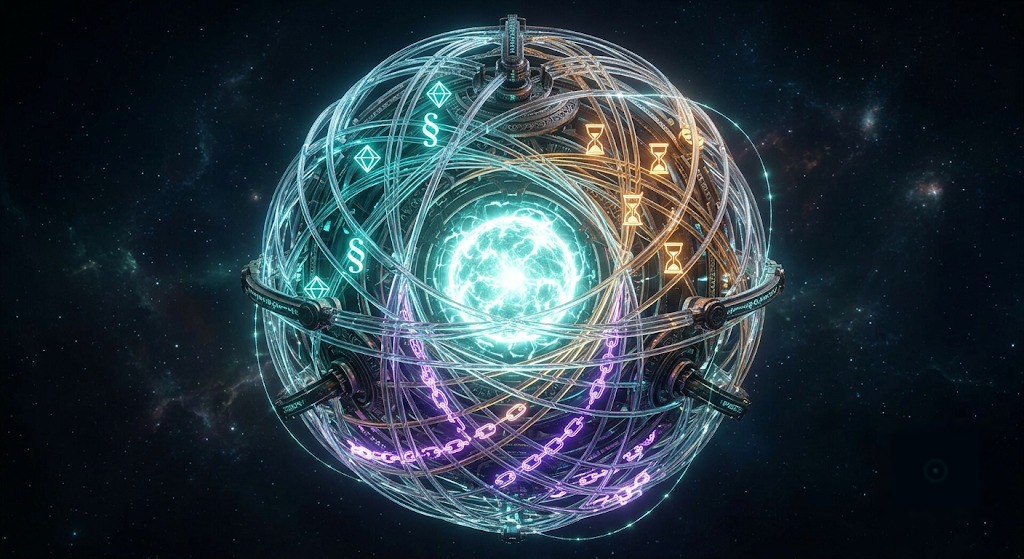
- No red underlines: Logic errors don't tear through your writing flow with squiggly lines mid-sentence. A soft, 3-pixel-wide edge indicator signals findings quietly at the margin.
- An accessible symbol system: Every logic category carries a distinct symbol in addition to its color — a paragraph glyph (§) for lexical/fact drift, an hourglass symbol for space-time collisions, a chain-link symbol for unresolved subplots.
- Three ways to resolve it: Confirm and fix the error, ignore it as a deliberate exception, or seal it as an intentional retcon for historical lore-lock in already-published volumes.
World-building and manuscript fused at the AST level
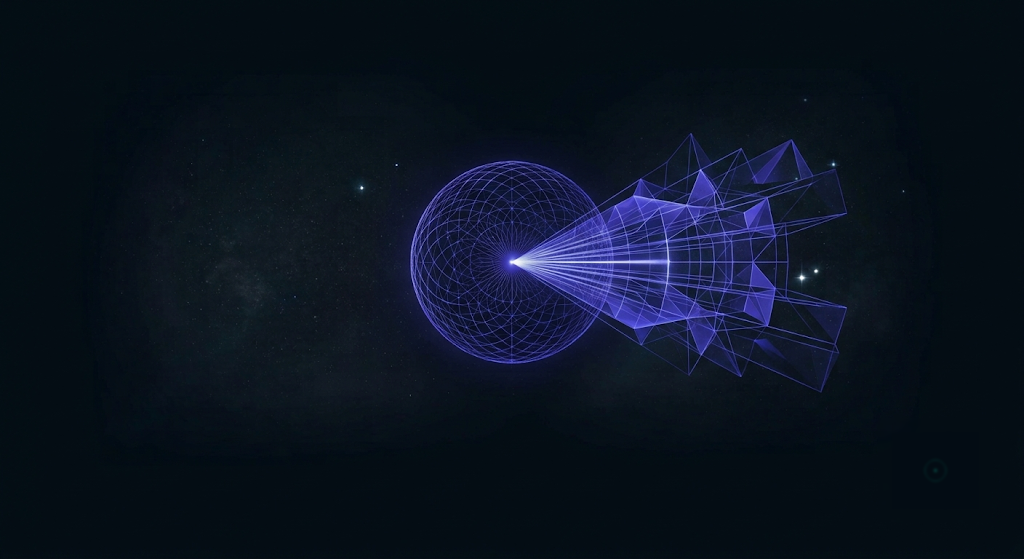
- Unbreakable canon depth: Characters and places are linked in the text not as raw letters, but as semantic nodes. Rename a character or have them act under an alias, and the link stays intact — no risky find-and-replace across the whole manuscript.
- Narrative freedom: Write as non-linearly as you think. Park scene fragments in free-floating drawers outside the chapter structure, and link events across an entire series.
Ergonomic accessibility as a foundation
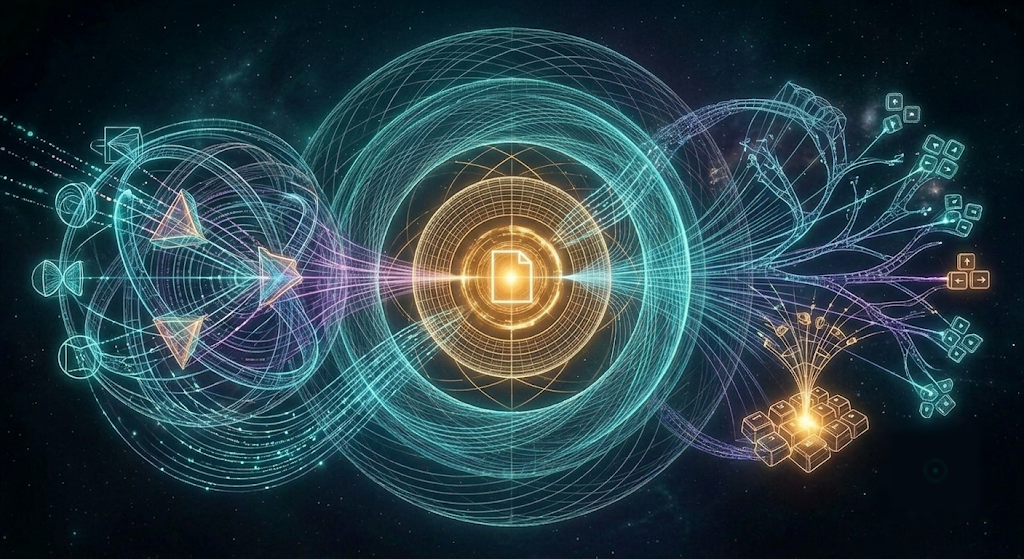
- A built-in neurodiversity suite: Switch the editor seamlessly to typefaces for dyslexia or low vision. Line height and letter spacing scale automatically.
- Bionic reading & a Zen mode: Optional visual reading aids, or a low-stimulus Zen mode that hides every UI element but the page itself. All typographic reading aids are display-only — your exported files are never affected.
- Uncompromising keyboard control: From creating new entities mid-sentence to resolving continuity flags, the entire system works without ever touching the mouse.
Data sovereignty, without overstating it
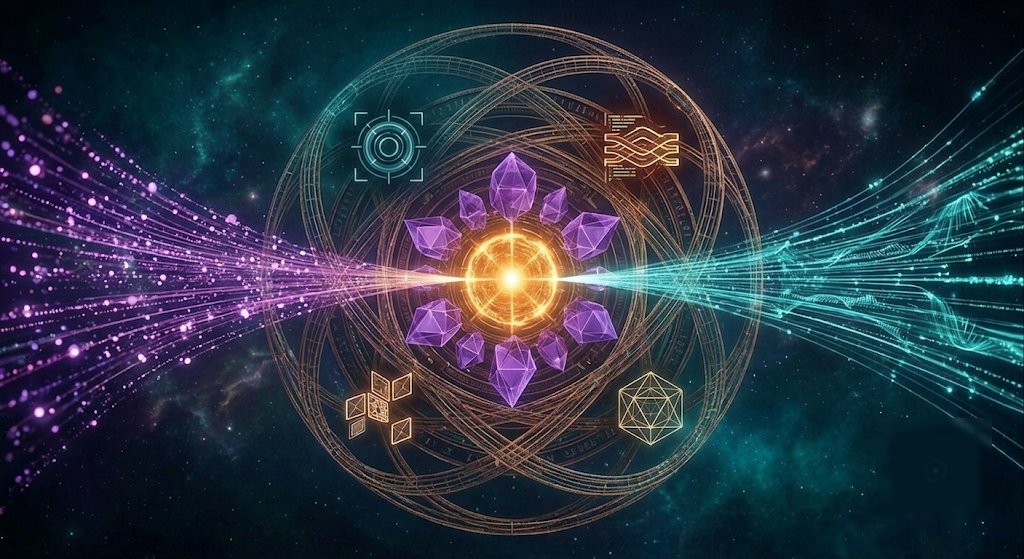
- 100% EU hosting & field-level encryption: Your manuscript is stored with field-level encryption in German data centers. Plaintext access is limited to the system processes that technically require it — full-text search or the engine's continuity checks, for instance. A full zero-knowledge architecture isn't compatible with those active features; instead, we rely on strict database-level access separation and a consistent audit log.
- No in-house text AI, a transparent BYOK option: We don't build text-generation AI into the core, and we never train models on your work. Optional AI tools connect only through your own API key — never automatic, never without your say-so.
- Lossless JSON export & a doomsday clause: Export your entire project as a universal JSON file at any time. Should Illumentis ever shut down, the offline editor becomes open source, with 90 days to complete your exports.
I'm building Illumentis as a solo developer out of a real need: there was no system on the market that combined the creative freedom of modern writing software with the rigor of an actual continuity engine.
Rather than chasing fast marketing promises or short-lived hype features, I'm investing the time in a genuinely solid foundation. The codebase is backed from day one by an automated test suite that keeps growing. The goal isn't fast growth at any cost — it's a reliable tool for authors who take their worlds seriously.
Frequently asked questions
What does "active, deterministic logic engine" mean?
Conventional word processors only store letters. Illumentis links your text semantically to your world-building data. The Illuminatio Engine keeps track in the background: if you establish that a journey takes three days, the system flags it when your character arrives after only a few hours according to the timeline.
Why is accessibility part of the free core?
We follow the curb-cut effect: features built for authors with dyslexia, ADHD, or visual impairments improve ergonomics and focus for every writer. That's why they're not a premium feature, but a foundation of the editor.
Is my manuscript analyzed or read for other purposes?
There is no advertising analysis, no third-party trackers, and your manuscript content is stored with field-level encryption on European servers. We do not run our own generative text AI and never train models on your text — not even through the optional BYOK tool, which uses only your own API key.
Who owns my data, and can I export it?
Your data belongs to you, without exception. You can export your entire project, including world-building, timelines, and manuscripts, at any time as a structured, lossless JSON file for local backup.
When does the closed beta start?
The project is currently in an intensive testing and hardening phase. We'll open the system gradually to selected test authors once we have sufficient confidence in our security and data-integrity testing.
Is Illumentis an alternative to conventional writing software and world-building wikis?
Yes. Illumentis replaces the combination of a separate word processor and an external world-building wiki or spreadsheet with a single system: the manuscript and world-building data are linked at the AST level, so continuity errors are caught automatically instead of being cross-checked manually between two disconnected tools.
Illumentis — the world-building operating system
Currently in active development. If you'd like to follow along, get on the list for the first test wave, or share architectural feedback on continuity tools, you can reach the developer directly by email.
kontakt@illumentis.de